
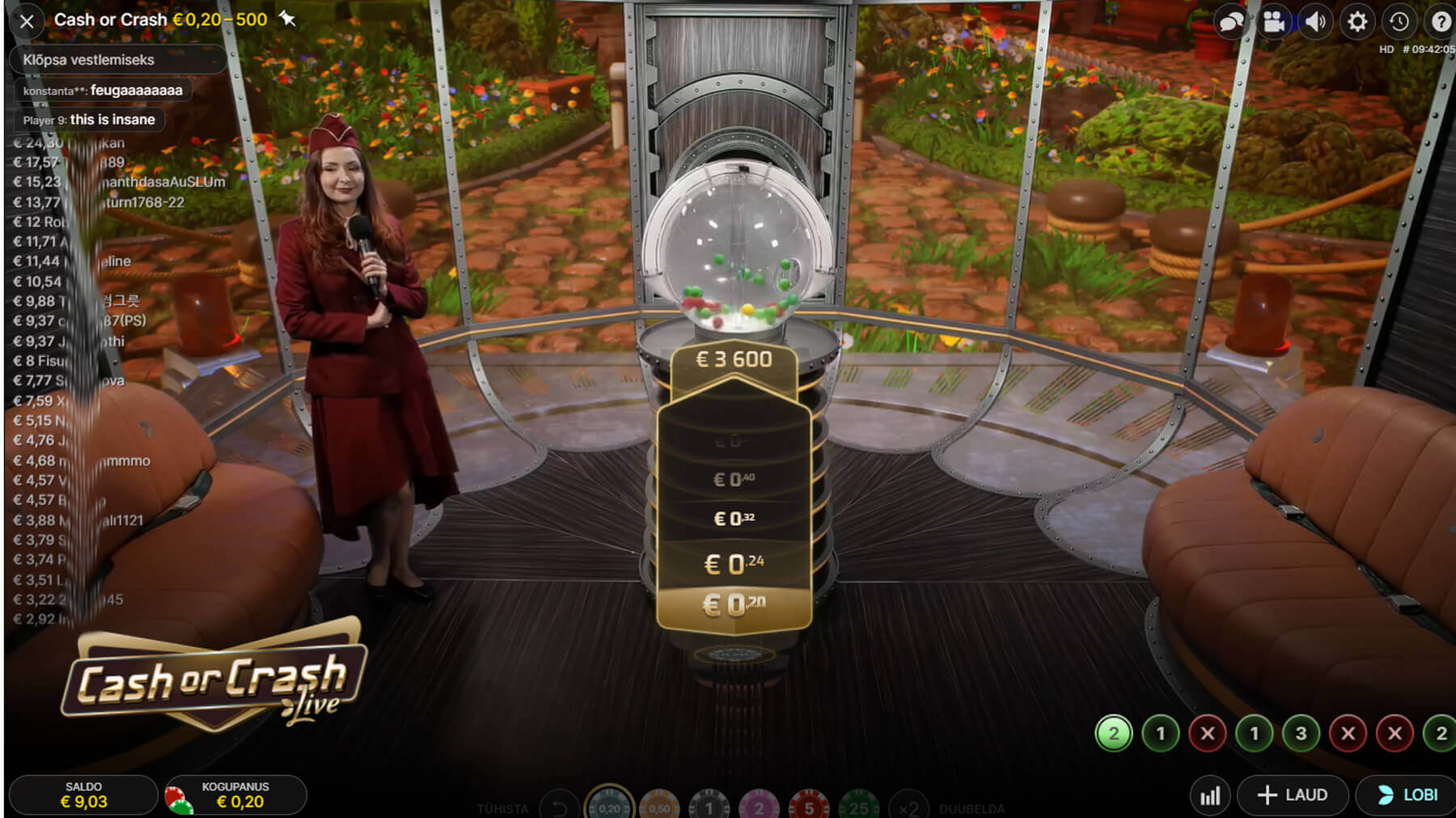
Having spent many hours studying the mechanics of live casino titles, I regard the relationship between technology and fair play truly captivating https://cashorcrash.live. Today, I’m exploring in depth a topic that’s crucial for any enthusiast of Cash or Crash Live: VPN screening. This goes beyond regulations; it deals with understanding the complex systems that ensure the game’s fairness, particularly for players who access it from areas with specific regulations including the UK. The deployment of VPN monitoring is a digital game of cat and mouse, and its consequences are tangible and instant for anyone seeking to bypass geographical restrictions. In this piece, I’ll analyze how these systems function, why they’re so rigorously enforced, and what it really means for the gaming experience on platforms like cashorcrash.live.

How UK Gambling Regulations Shape These Policies
The UK Gambling Commission (UKGC) is widely considered the world’s gold standard for online gambling regulation, and its influence closely shapes the VPN policies of games like Cash or Crash Live. The UKGC’s License Conditions and Codes of Practice (LCCP) are thorough, and condition 5.1.1 explicitly requires operators to prevent customers from gambling who are located in countries where they do not hold a license. This isn’t a suggestion; it’s a legal obligation with severe penalties for non-compliance. Operators must employ “effective means” to identify the geographical location of a customer, which in today’s digital landscape means investing in the top-tier VPN detection technologies I covered earlier.
For the UK player, these regulations are a double-edged sword. On one side, they provide significant protection: ensuring game fairness, guaranteeing that player funds are held in segregated accounts, and mandating clear pathways for dispute resolution. On the other side, they enforce rigid boundaries. A UK-licensed operator offering Cash or Crash Live cannot, under any circumstances, knowingly allow play from an unlicensed territory, even if the player is a UK citizen currently abroad. The operator’s duty is to the license and the jurisdiction. This rigid framework is why customer support has zero flexibility when a VPN is detected; their hands are legally tied. The regulation prioritizes systemic integrity over individual convenience, defining the non-negotiable landscape in which these games exist.
Valid Alternatives for UK Players Outside the UK
So, what does a devoted UK fan of Cash or Crash Live do when traveling or briefly residing outside the country? The key is to pursue legitimate alternatives as opposed to risky workarounds. The first and most straightforward step is to simply contact the casino’s customer support ahead of you travel. Ask about their exact policy on temporary travel. Some operators, while not all, could have a system for short-term absences, yet they will still likely curb play from certain prohibited countries regardless of your account origin. Transparency is your biggest asset here; hiding your movement activates the detection systems, but declaring it may, at best, provide you with clarity on your account status.
If your travel is lengthy or you’ve relocated abroad, the legitimate path is to discover a licensed operator in your new country of residence that provides Cash or Crash Live. Evolution Gaming’s titles are widely distributed, so there’s a high chance a locally licensed casino in your new region will feature the game. You would then be required to close your UK account and sign up again with the local operator, completing their verification process. Though this means beginning anew, it assures you are playing legally, your deposits and winnings are safeguarded by local law, and you can appreciate the game without the constant worry of detection and penalty. It respects the regulatory framework and safeguards your player rights.
How come Cash or Crash Live Imposes Rigorous Geo-Restrictions
The application of geo-restrictions is hardly a whimsical decision by the game provider; it is a multifaceted legal and regulatory mandate. Cash or Crash Live, like all established live casino games, runs under certain gaming licenses awarded by authorities like the UK Gambling Commission (UKGC), the Malta Gaming Authority (MGA), or others. Each license specifies clearly which territories the operator is authorized to provide its services to, based on local laws. The UK market is one of the most strictly regulated in the world, with rigorous rules on player protection, advertising, and anti-money laundering. Allowing unrestricted access from unauthorized regions would be a direct violation of these licenses, jeopardizing massive fines or even a complete revocation of their right to operate.
Beyond the legal imperative, there is a strong ethical and business rationale. Adhering to their licensed territories allows the platform to apply personalized responsible gambling measures, process secure payments through vetted local methods, and deliver customer support that grasps regional contexts. For you, the player, this creates a more protected environment. When a platform like cashorcrash.live determines your true location, it can enforce correct tax withholdings, present appropriate currency options, and ensure the game’s outcome is controlled by the fair play standards of a recognized jurisdiction. Seeking to circumvent these protections with a VPN does not simply break rules; it possibly remove you from the safety net intended to protect you.
Refuting Common Myths About VPNs and Online Casinos
A common myth suggests that using a “high-quality” or “no-log” VPN leaves you hidden and undetectable. I’m here to tell you that’s a dangerous fantasy. While these services might hide your activity from your internet provider or streaming services, they are not magic against specialized gaming compliance systems. The detection methods I described earlier often don’t rely on breaking VPN encryption; they rely on behavioural analysis and IP reputation. The IP address given to you by the VPN, no matter how premium, is still part of a known block belonging to a data center. Advanced detection can spot this instantly, rendering your expensive subscription useless against casino geo-fencing.
Another common misconception is that if you’re a UK citizen with a UK bank account, you should be able to play from anywhere. This mixes citizenship with jurisdiction. Online gambling licenses are territorial, not national. The operator’s license governs where the *gambling transaction* takes place—that is, your physical location at the moment you press “spin” or “cash out.” Your passport or bank details are irrelevant to this point of law. The system is built to prevent the very scenario of someone bringing unregulated gambling into a territory. Believing your nationality overrides this is a fundamental misunderstanding that leads directly to account penalties. The rule is simple: your location at the time of play is the only thing that matters.
“I Only Use It for Security” and Other Excuses
Some players claim they use a VPN primarily for general internet security and privacy, not to trick the casino. Unfortunately, the operator’s systems cannot distinguish intent. The moment your connection is routed through a VPN server, it activates the same flags as a user intentionally trying to access from a restricted country. There is no “innocent until proven guilty” in this automated process. Similarly, the idea that connecting from a restricted country but still using UK payment methods is valid is flawed. The payment method is not a proof of location. Operators provide clear guidelines: you must be physically located within a licensed territory. Any technological manipulation that obscures that physical truth is a violation, irrespective of your personal justification for using that technology.
The future of Geolocation and Fairness
The arms race between location masking and detection is spurring advancements toward smoother, yet stronger, checking processes. I foresee a scenario where background location tracking becomes increasingly refined, possibly combining with device-level secure elements or employing permitted, low-level network data to establish location without intrusive prompts. For games like Cash or Crash Live, which thrive on real-time interaction and trust, deploying smooth yet robust position checks will be essential. This may signify a transition from just preventing VPNs to creating adaptive gameplay experiences that adapt based on confirmed position, securing adherence without unnecessarily disrupting the gaming path for genuine users.
Moreover, the notion of fair play is extending beyond the game’s RNG to cover the entire ecosystem’s integrity. Reliable location tracking secures that every participant in a particular area are governed by the identical betting restrictions, bonus regulations, and tax laws. This fosters a truly level playing field. As regulations evolve, possibly we’ll see enhanced cross-border coordination on licensing, streamlining the environment. However, for the near future, detection technologies will become increasingly accurate. For the dedicated user, the takeaway is clear: the simplest way and greatest safety is always to play from your genuine, licensed location, embracing the laws that exist to protect you and maintain the games you appreciate, like the thrilling, suspense-packed journey of Cash or Crash Live.
The Direct Impact on UK Users Accessing via VPN

For a UK gambler considering using a VPN to access Cash or Crash Live, possibly from overseas or to check an alternative setup, the ramifications can be severe and swift. The first outcome is a banned account or a permanent closure. When detected, the platform’s automated systems will normally mark the account, halt any current game, and freeze the funds. The user is then forced into a verification process that requires submitting proof of address and identity. This is no simple checkbox; it is an in-depth investigation to prove the terms were broken. During this period, which may last days or weeks, the player has zero access to their funds or the game, turning a quick action into a long-term problem.
But the impact goes deeper than a temporary lock. If the VPN usage is confirmed, the platform has the right, as outlined in their terms of service to which all players consent, to confiscate any winnings accrued during the period of infringement. More importantly, it can permanently damage the user’s connection with the brand and its associated casino partners. Being detected for VPN violations creates a record that can make subsequent checks tough on other sites with analogous monitoring tools. Ultimately, the immediate reward of entering a game is trivial relative to the lasting danger of surrendering your whole balance, your profile, and your standing as a reliable user in a compact environment.
Financial Risks and Account Confiscation
Let’s discuss finances, because that’s often the brutal bottom line. If you breach the terms by hiding your location using a VPN, you are technically playing under false pretenses. This nullifies the contractual agreement between you and the operator. In these situations, the usual procedure, which is clearly outlined in the terms you accepted, allows the operator to void all bets and forfeit the account balance. As a result any deposits you made, every bonus you took, and crucially, all earnings you produced while the breach occurred may be lawfully retained. I’ve seen cases where members saw substantial funds disappear overnight following a VPN detection alert, with little to no recourse.
Reputation and Login Implications
Beyond the immediate financial hit, there’s a persistent blemish on reputation. Modern gaming platforms exchange fraud and abuse data through safe networks. A proven case of VPN circumvention can lead to your details being distributed (in line with privacy laws) across a consortium of operators. This can result in you being blacklisted or facing enhanced examination when registering for other trustworthy online casinos. You are considered a flagged user. Moreover, your payment methods, such as your credit card or e-wallet details, might be flagged. This creates a series of access issues, making legitimate online gambling in the future, even from your proper location, a frustrating experience full of extra verification hurdles.
Deciphering Virtual Private Network Detection Technology
To grasp the manner Cash or Crash Live and similar platforms detect VPN usage, it is necessary to peel back the layers of internet connectivity. Upon connecting to a VPN, your traffic is routed via a server elsewhere, masking your actual IP address. However, this process leaves digital fingerprints that advanced detection systems are trained to spot. Such systems do more than verify your IP; they evaluate a multitude of data points in real-time. They search for anomalies in the time-to-live (TTL) of your connection, inspect the latency profiles that may hint at an irregular routing for your traffic, and check your IP against known databases of commercial VPN and proxy server addresses. This is an ongoing, automatic inspection of all connections that hit their servers.
The technology behind this is constantly evolving. Providers like GeoComply or MaxMind deliver niche offerings that gather information about IP addresses, including their link to data centers—a frequent sign of virtual private networks. Additionally, sophisticated scripts can run in the background of your browser session, running assessments that disclose whether your browser’s stated timezone aligns with your IP location or if specific WebRTC protocols are exposing your actual IP address. For a high-stakes, real-cash game such as Cash or Crash Live, dedicating resources to this depth of analysis is essential. It forms the bedrock of their licensing compliance and their commitment to creating a level playing field for all authorized users.